
La inteligencia artificial dejó de ser una promesa lejana para la industria acuícola. Hoy opera en líneas de proceso, en centros de cultivo y en plataformas de análisis. Pero para que funcione de verdad, los datos tienen que estar ahí primero. Conversamos con cuatro referentes del sector sobre cómo están construyendo esa base y qué viene después.
Ximena Tapia: La generación de datos confiables es el cimiento para aplicar IA
Ximena Tapia lleva más de una década trabajando en la intersección entre tecnología y producción acuícola. Para ella, el principal cuello de botella no es la IA en sí misma, sino la calidad de los datos que la alimentan. "Las plantas que hoy pueden sacar provecho real de la inteligencia artificial son aquellas que llevan años midiendo de forma consistente", dice.
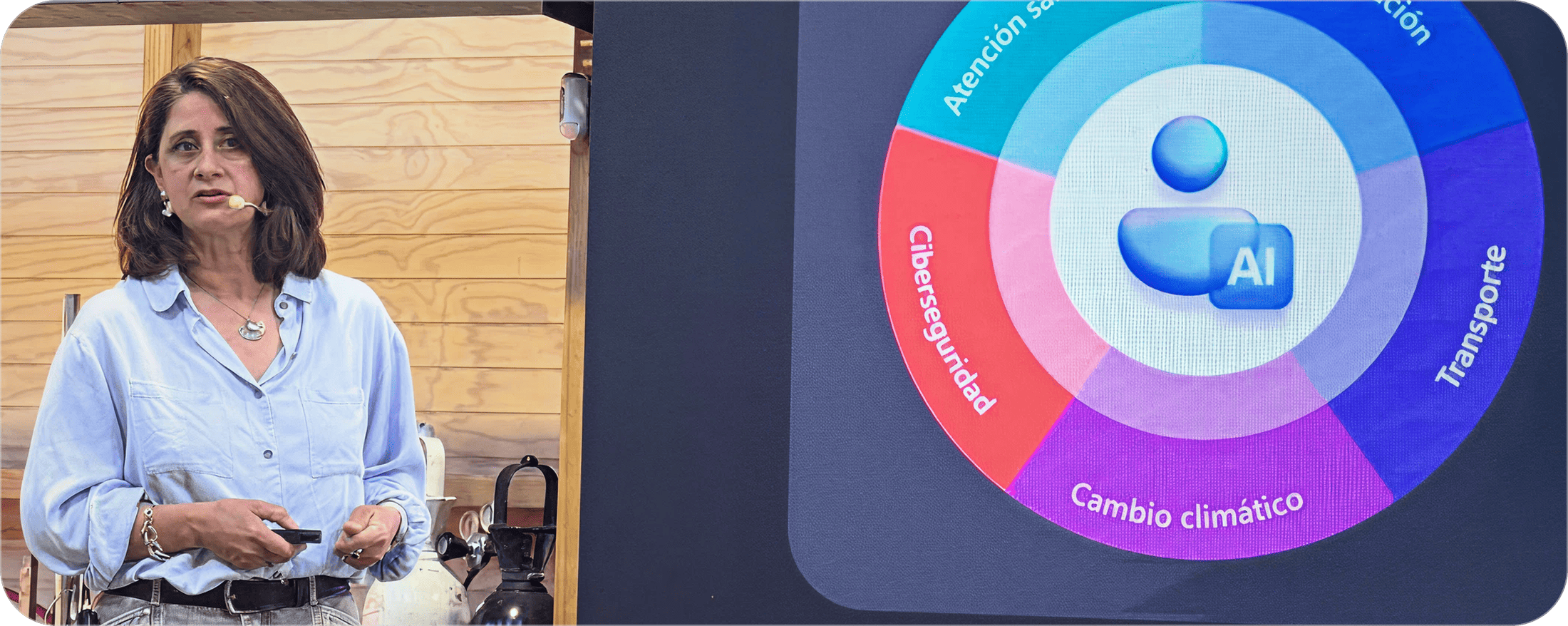
La tesis de Tapia es directa: antes de hablar de modelos predictivos o de automatización avanzada, hay que asegurarse de que los datos que se capturan sean correctos, estén bien etiquetados y sean representativos de la variabilidad real del proceso. "Un modelo entrenado con datos malos va a tomar decisiones malas, y en una planta de proceso eso tiene un costo concreto por tonelada", explica.
Si no tenemos datos limpios, ordenados y accesibles, la inteligencia artificial no tiene dónde pararse.
Ximena Tapia — Especialista en trazabilidad acuícola
En ese contexto, soluciones como Q-Sort y Smolt Tracker cobran un valor que va más allá de la clasificación en tiempo real: cada medición estructurada que generan es un punto de datos que, acumulado en el tiempo, permite entrenar modelos más precisos y construir una base de conocimiento propia de cada planta.
Matías Poupin y Tomás Vera: Décadas usando e implementando IA
Matías Poupin y Tomás Vera representan la perspectiva de quienes ya llevan años implementando algoritmos de aprendizaje automático en entornos productivos reales. Para ellos, el debate no es si la IA funciona, sino cómo se despliega de forma confiable en condiciones de planta donde el hardware está expuesto al agua, la temperatura varía y los operarios tienen distintos niveles de formación tecnológica.
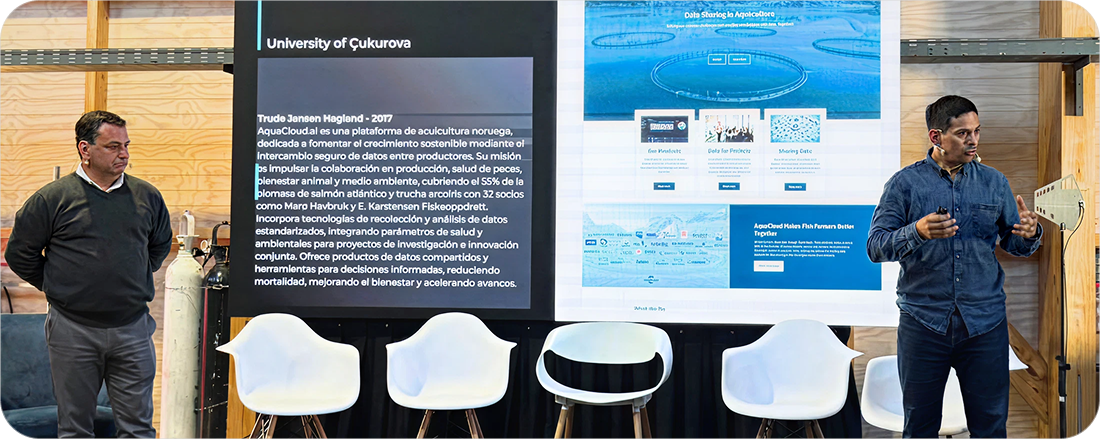
El caso de Blue River Technology —adquirida por John Deere y conocida por sus sistemas de visión artificial aplicados a la agricultura— es para Poupin una referencia directa: "Lo que hicieron ellos con cultivos vegetales, nosotros lo estamos haciendo con peces. La lógica de implementación es similar: sensores robustos, modelos entrenados con datos propios del ambiente operacional y ciclos cortos de retroalimentación."
No basta con tener el modelo correcto. Hay que tenerlo corriendo de forma estable, en tiempo real, sin depender de conexiones externas.
Matías Poupin — Ingeniero en IA aplicada
Vera agrega que uno de los aprendizajes más importantes de estos años es que el modelo es solo una parte del sistema. La calidad de las cámaras, la iluminación, el mantenimiento del hardware y la calibración periódica son igual de críticos para que el resultado final sea confiable.
Pablo Durán y Jonathan Bello (Akva Group): Cómo implementar IA en entornos reales
Desde Akva Group, Pablo Durán y Jonathan Bello trabajan directamente con los equipos de planta que reciben e integran estas tecnologías. Su perspectiva es más pragmática: la IA tiene que resolver problemas concretos, reducir errores humanos y liberar a los operarios para tareas de mayor valor, sin generar nuevas complejidades que el equipo no pueda manejar.
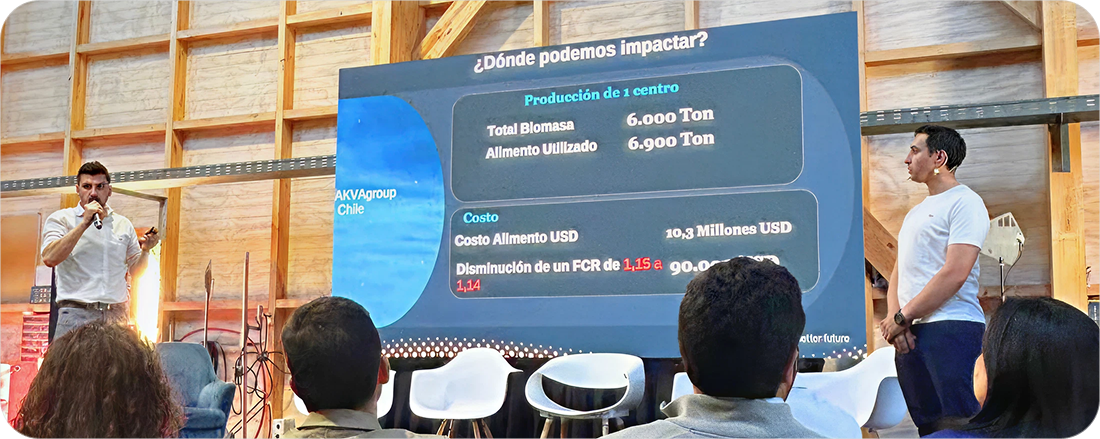
"El desafío de implementación no es técnico, es humano", dice Durán. "Tienes que lograr que el operario en terreno confíe en el sistema. Si el sistema se equivoca y no hay un mecanismo para corregirlo en tiempo real, perdés toda la confianza que construiste." Por eso, las soluciones que mejor funcionan son aquellas que muestran su razonamiento, permiten intervención manual y aprenden de los casos donde el operador discrepa con la decisión del modelo.
La IA no reemplaza a la gente en terreno, pero sí abre una ventana de posibilidades que antes no existía.
Jonathan Bello — Akva Group
Bello destaca además que la trazabilidad que generan estas herramientas tiene un impacto directo en la auditoría y certificación de los procesos, algo que los mercados europeos y norteamericanos exigen con cada vez más rigor. "Tener un registro automático, estructurado y verificable de cada lote ya no es un diferencial: va a ser un requisito."
IA útil, aplicada y con foco en el valor
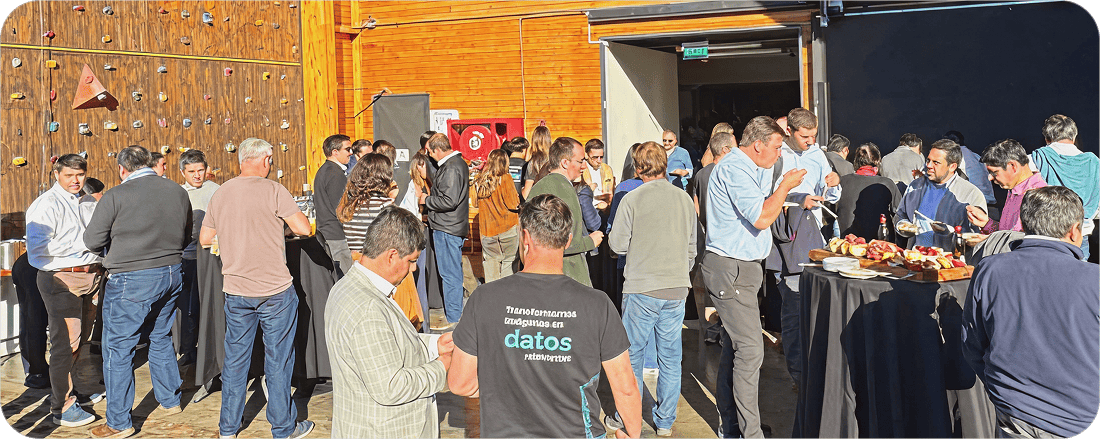
El hilo conductor de estas conversaciones es claro: la inteligencia artificial más valiosa en la industria salmonera no es la más sofisticada ni la más novedosa, sino la que resuelve un problema real, genera datos confiables y puede operar de forma estable en las condiciones de una planta de proceso.
Lythium trabaja exactamente en ese espacio. Cada solución —desde Q-Sort hasta Smolt Tracker— está diseñada para capturar datos precisos, estructurados y accionables, y para hacerlo de forma autónoma, en tiempo real y sin depender de la nube para la operación crítica. Ese es el cimiento. Lo que se construye sobre él es lo que ya están logrando los clientes que llevan años trabajando con nosotros.